 TheOneToGo
Residenz München
Residenz München is one of the strongest museum visits in Munich, but it rewards focus, not completionism. Hit the main rooms and the Treasury, then walk out before palace fatigue sets in.
Residenz München is the old Wittelsbach palace in the center of Munich, and from the street you have no idea how far it goes back. Go for the Antiquarium, the Treasury, the courtyards, and the slow realization that Bavarian rulers never once asked themselves whether something was too much.
Worth it for
- Travelers who like palaces, decorative arts, dynastic history, and dense museum interiors
- Rainy days, winter visits, and anyone who wants a deeper Munich sight beyond the old-town squares
You can skip if
- You only have an hour and want something light or mostly outdoors
- You wear out fast in long palace routes where the rooms start to look alike
Our pick for Residenz München
The Residenz is dense enough that a knowledgeable guide changes everything: you walk through rooms that look purely decorative and leave understanding exactly which Wittelsbacher ordered what and why. This tour handles entry ahead of time so you go straight in, then spends two and a half hours connecting the Treasury relics, the state rooms, and the Hofgarten into a story that holds together long after you leave.
If our pick doesn't fit
The Bavarian Palace Administration runs its own ticket shop for the palace museum, treasury and theatre, so you can pick the combination you want without a reseller markup.
Official ticketsA private tour with a guide to yourself and more time in the Treasury, good if you want a deeper visit.
See all options for Residenz München
Which ticket should you buy?
Why It Matters
The Residenz started as a fortified seat in the late 14th century and kept growing until the monarchy fell in 1918, passing through Bavarian dukes, electors, and kings along the way. So you are not looking at one palace in one style. You are walking through Renaissance halls, then Baroque rooms, then Rococo ornament, then royal apartments from the 1800s, all bolted onto each other.
The Antiquarium is the best room to start with. It is a long vaulted Renaissance hall lined with sculpture and painted decoration, and it feels calmer than the gilded rooms waiting on the other side. After that the palace turns into a long run of chambers, chapels, galleries, and court display, one after another.
What You Actually See
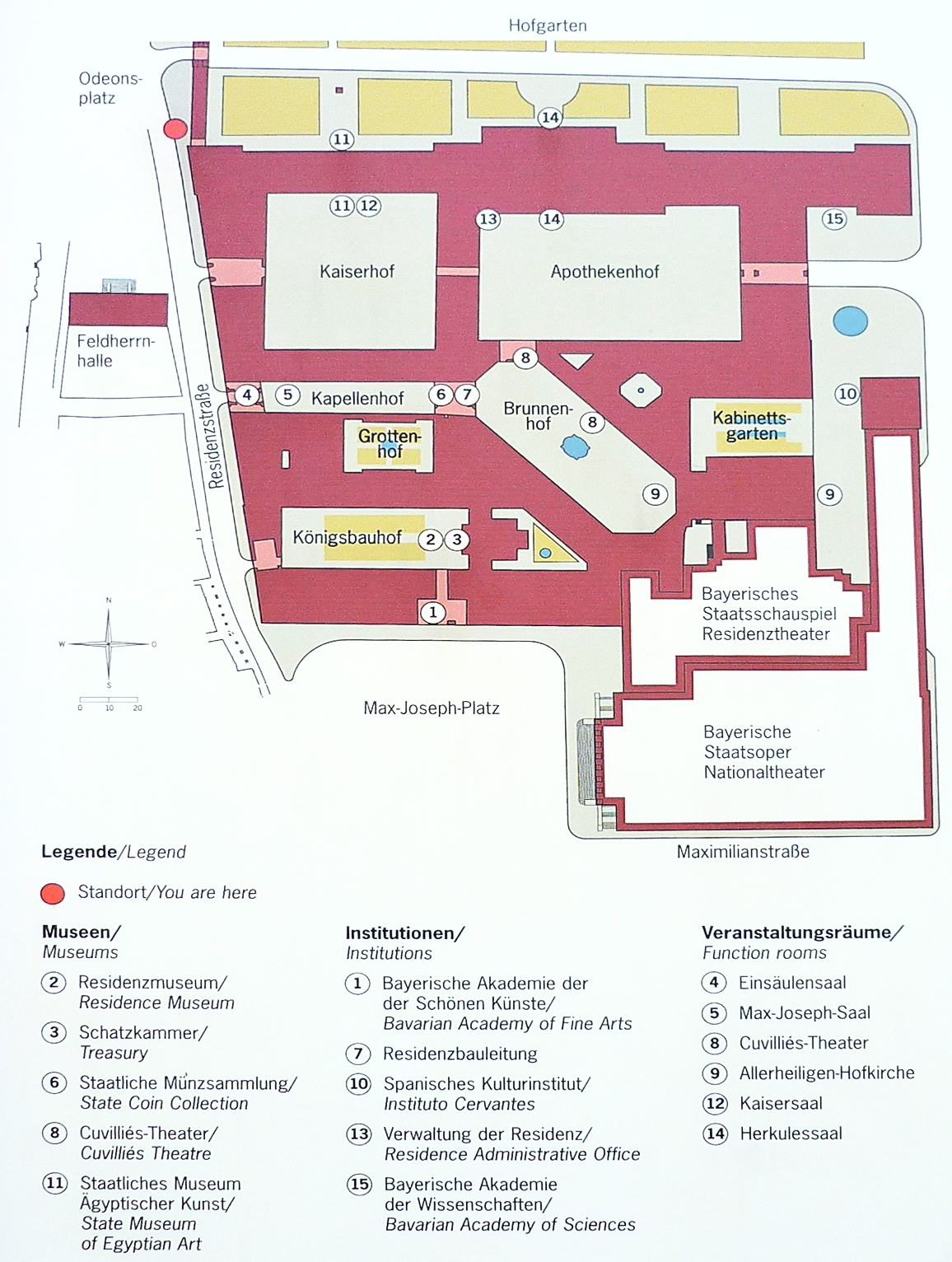
The Residence Museum is the main route through the interiors. You get state rooms, court chapels, painted ceilings, furniture, portraits, porcelain, and tapestries, plus a lot of reconstruction that quietly tells the story of postwar Munich as much as it tells the story of royal Bavaria.
The Treasury is a separate visit and a tighter one. Crowns, reliquaries, jeweled objects, ceremonial swords, crystal, ivory, and religious pieces from the Wittelsbach collections, all in a small space. If your patience for palace rooms drains fast, the Treasury often works better as the second half because it is compact and built around the objects themselves.
How To Visit Without Burning Out
Do not pencil this in as a quick stop between Marienplatz and the English Garden. The Residenz is big, and the museum route starts to blur if you try to give every room the same attention. Pick a few anchors instead: the Antiquarium, the Ancestral Gallery, the Ornate Rooms, the Court Chapel, and the Treasury.
You can do it on your own, and the official audio guide covers what most people need. A private or city tour helps if you want the Wittelsbach story laid out in a straight line rather than pieced together from labels. If you would rather set your own pace, give yourself a limit. About two hours is right for the Residence Museum. Tack on the Treasury and Cuvilliés Theatre only if you still want more interiors after that.
The Tradeoff
The Residenz earns the time, but this is not casual sightseeing. Some rooms are dense, the route runs long, and on busy days the narrower stretches get unpleasant. In warm weather the interiors turn stuffy, so an early start is the easier call.
What you get in return is one of Munich's best wet-weather sights and one of the clearest places to see how ceremony, religion, collecting, and dynasty shaped old Bavaria. If you have already done Marienplatz, I would take this over another loop around the old town.
Residenz München: FAQs
Yes, if you like palaces, decorative arts, royal history, or museums stuffed with historic objects. Less so if you just want a fast photo and to move on.
Around 2 hours for the Residence Museum. Closer to 3 hours or more if you add the Treasury and Cuvilliés Theatre and want to do it without rushing.
The Antiquarium is the room most people remember. The Treasury is the best thing to add on, since it is tighter, easier to follow, and full of precious objects.
No. You can visit on your own, and that is the better option if you want to control your pace. A guide pays off only if you want the palace history explained rather than read off labels and the audio guide.
Depends on the child. Older kids who like castles, crowns, and decorated rooms may get into parts of it, but the full museum route runs long for younger ones.
You can usually enjoy some of the exterior areas and the Hofgarten without doing the full museum visit, but the main interiors, Treasury, and Cuvilliés Theatre need tickets. Check the official site first, since access can change for events or works.
Explore more in Munich
Plan your trip
- Best time to visit Munich
- Day trips from Munich
- One Day in Munich: Old Town First, Beer Hall Last
- Two Days in Munich: Old Town First, Palaces Second
- 3 Days in Munich: Old Town, Palaces, and Neuschwanstein
- Munich With Kids: Museums, Parks, Palaces, and One Very Useful Zoo
- Munich at Night: Beer Halls, River Banks, and a City That Goes Home Early
- Munich When It Rains: Museums, Palaces, Beer Halls, and Dry Detours
- Residenz München vs Deutsches Museum: which Munich museum day to pick
- Dachau vs Neuschwanstein: Which Munich Day Trip Should You Take?
Worth it, or skip it?
Join the early list. When it launches, expect the occasional short email: the handful of things actually worth your time in each city, the famous ones to skip, and when it's free or cheaper to just walk in. No paid placement.